5 Key trends in the retail sector for 2025: Adaptation, innovation and growth
June 12, 2025 - Shops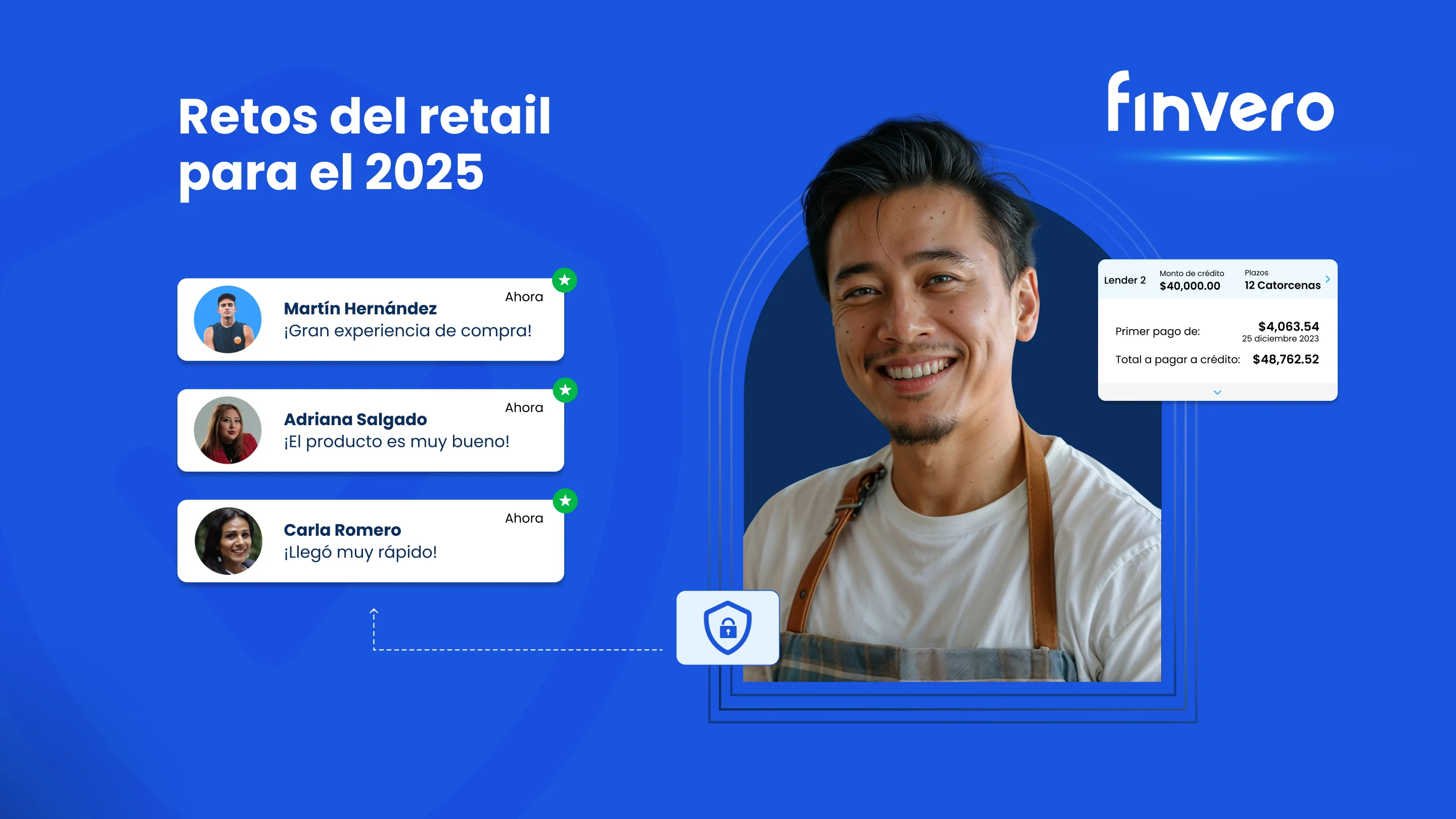
Con el cierre de 2024 a la vuelta de la esquina, el sector retail se prepara para enfrentar una
transformación profunda impulsada por la tecnología, la personalización y el cambio en las expectativas de los
consumidores. A medida que las empresas avanzan hacia 2025, es fundamental entender las tendencias que darán forma a
la industria, con el fin de mantenerse competitivos y aprovechar las oportunidades emergentes.
Con un valor
de mercado de 658.3 mil millones de pesos mexicanos en 2024, según el informe Retail & e-Commerce by LLYC, México ha consolidado su posición como líder en el crecimiento del comercio electrónico y retail a
nivel regional. Con base en ello, a continuación, se presentan las cinco principales tendencias que definirán el
sector en 2025:
1. Credit Personalization: Boosting sales and reducing risk
Para 2025, la oferta de crédito personalizado en retail se convertirá en una estrategia clave
para fidelizar a los clientes y aumentar las ventas. La adopción de tecnologías como la Generative AI y el uso de Alternative Data permitirá a las empresas optimizar sus modelos crediticios, mejorando las tasas de conversión y
reduciendo riesgos.
Ofrecer planes de pago flexibles y adaptados a las necesidades del cliente no solo
incrementa las loan conversion rates hasta en un 30%, sino que también puede elevar el ticket promedio en un 20%. Este
enfoque personalizado será fundamental para retener a los compradores y generar ingresos sostenibles.
2. Total omnichannel: Physical and digital integration as a basic necessity
Omnichannel will no longer be just a competitive advantage but a market requirement, a commodity. Consumers expect a seamless experience that integrates both physical and digital channels, where they can start a purchase in one environment and finish it in another without interruption.
According to McKinsey, 75% of consumers already use multiple channels to make their purchases, and this figure will keep rising in the coming years. Brands will need to continually optimize the customer experience, ensuring a frictionless interaction between physical and digital stores.
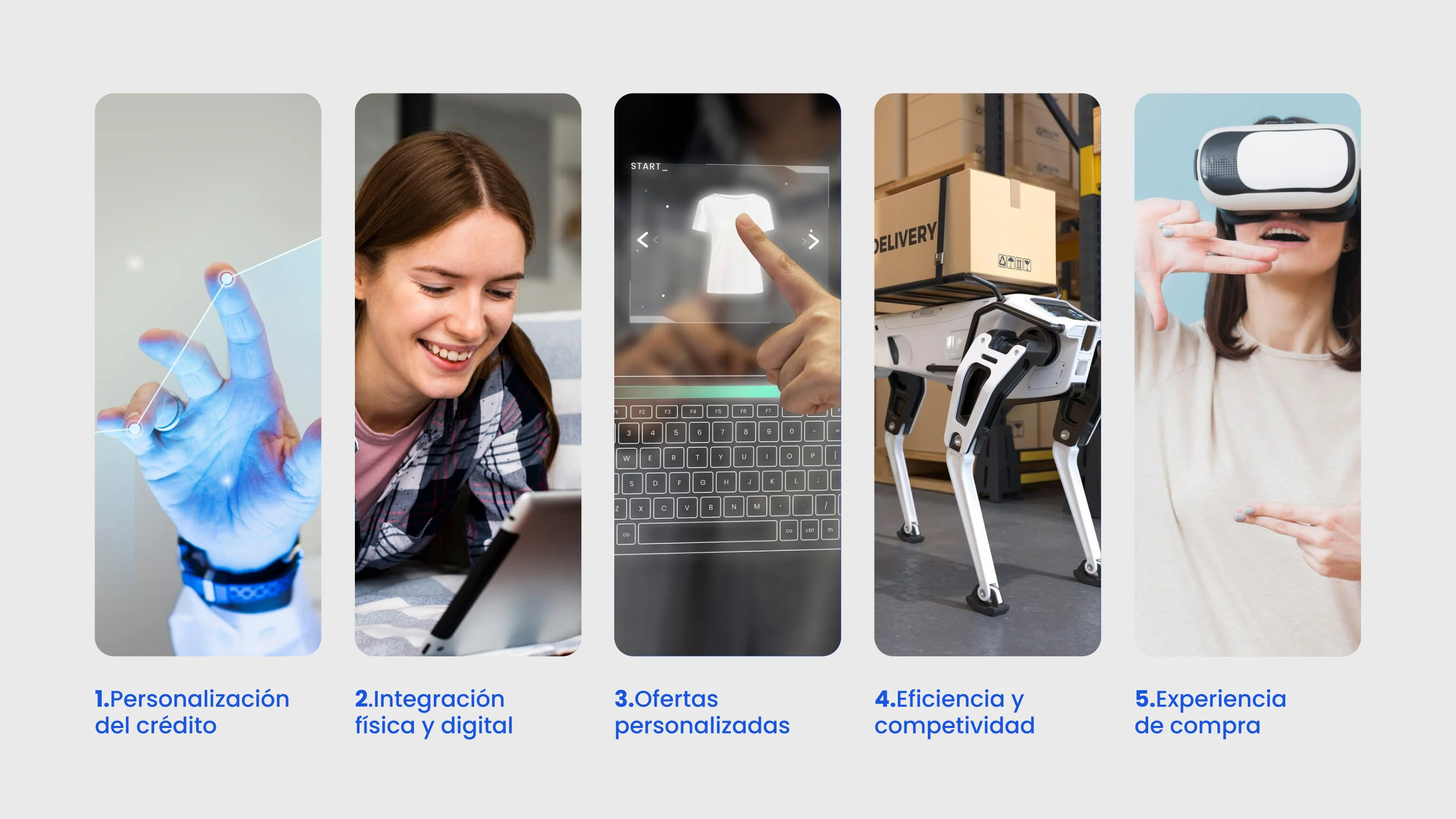
3. Personalized offers based on AI and Big Data
The use of artificial intelligence (AI) and big data will be key to creating hyper-personalized shopping experiences that emotionally connect consumers with brands. The ability to use alternative data and purchasing behavior will allow retailers to build more precise profiles, generating more personalized and relevant recommendations.
According to a Gartner report, it is estimated that by 2025, 80% of sales interactions will be mediated by artificial intelligence. This will include everything from advanced chatbots to predictive algorithms that anticipate consumers' needs and purchasing preferences.
4. Logistics automation: Efficiency and competitiveness
Advances in automation, with the use of autonomous robots and drones to deliver products, promise to transform logistics in the retail sector. This automation will improve operational efficiency, reduce costs and speed up delivery times.
According to an analysis by Grand View Research, investment in retail automation, including the use of robots and autonomous technologies, is projected to grow at a compound annual growth rate (CAGR) of 9.3% between 2024 and 2030, with strong momentum in logistics automation.
5. Voice assistants and augmented reality: Revolutionizing the shopping experience
Para 2025, la interacción entre humanos y tecnología será aún más intuitiva gracias a asistentes
de voz como Alexa y Google Assistant, que permitirán a los consumidores realizar compras mediante comandos de voz.
Además, la realidad aumentada (RA) y la realidad virtual (RV) transformarán la forma en que los consumidores
exploran y prueban productos, desde ropa hasta muebles.
Un estudio de Emergen Research estima que el valor de las compras mediante asistentes de voz alcanzará los $19.4 mil millones en
2025, mientras que se espera que el 25% de los retailers adopten RA y RV para enriquecer la experiencia de compra.
Estas tecnologías permitirán a los consumidores visualizar productos en sus espacios reales, mejorando la
experiencia de compra online y física.
By 2025, the retail sector will be defined by the implementation of new technologies, mass personalization and more efficient logistics. Companies that embrace these trends will not only stay relevant in the market but will also be better prepared to meet consumers' changing demands.
In this context, platforms like Finvero, which let you integrate personalized credit solutions across the entire credit life cycle, become a strategic ally for boosting sales and improving the customer experience.
Finvero is the platform that offers solutions for credit management, covering the credit life cycle from application to collection.
Schedule a demo! and discover how to increase your sales by 30% with innovative credit solutions.
 Facebook
 Linkedin
 Instagram
 Whatsapp