Credit Scoring: The fusion of traditional and alternative data to increase credit conversion
October 30, 2025 - Financial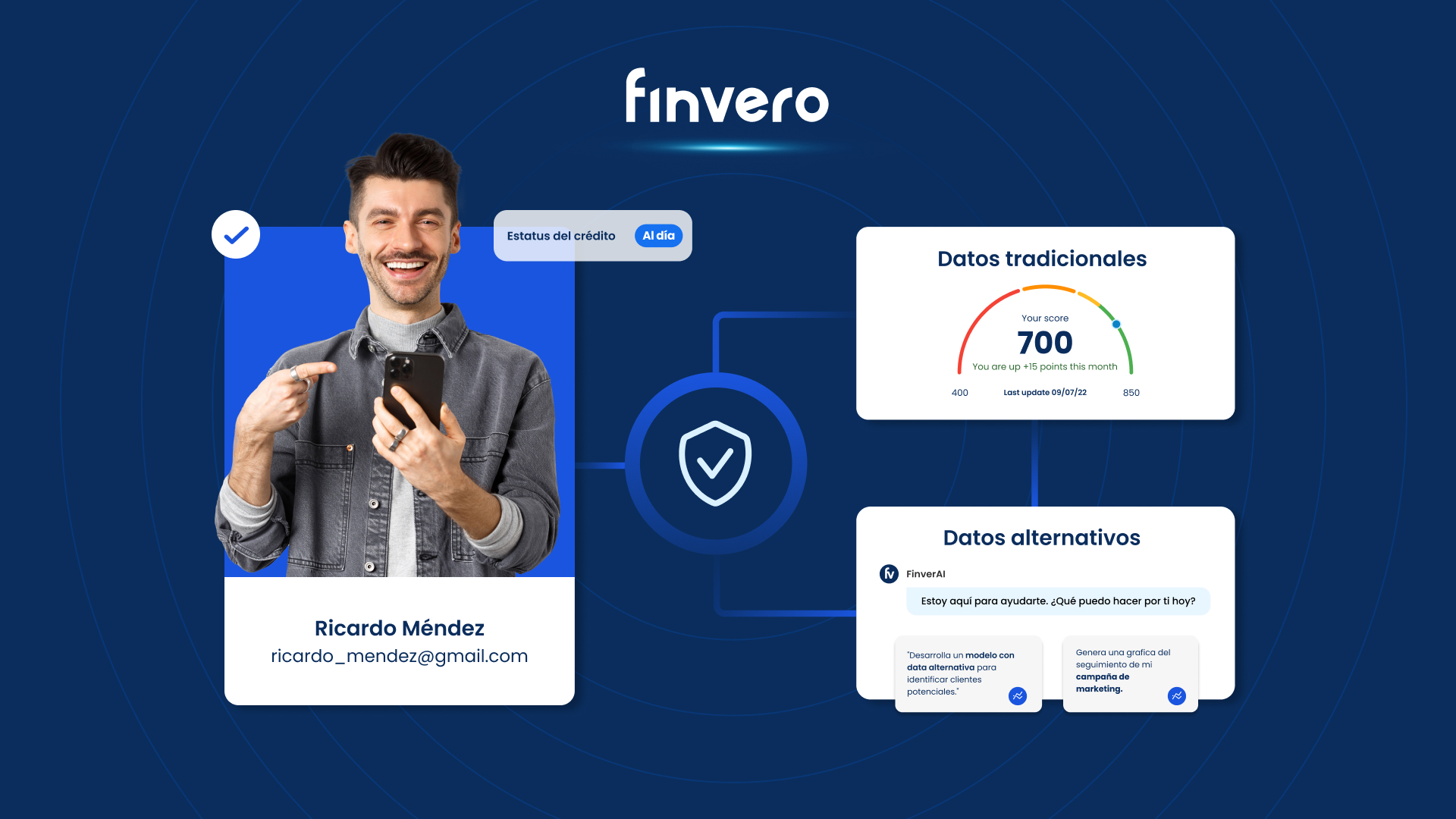
Credit scoring has evolved significantly; it is no longer limited to traditional credit history. The fusion of traditional data (payment history, income, debt) and alternative data (social media behavior, online purchase history) is revolutionizing the way an individual's or company's creditworthiness is assessed.
This new approach, powered by big data, artificial intelligence and machine learning, offers a more complete and accurate view of the risk profile, which translates into higher loan conversion.
According to Iupana, 87% of lenders that use alternative data do so to more accurately assess customers with thin or no banking files, and 64% improve their risk assessment of unbanked consumers.
Historically, credit scoring based on traditional data relied on information provided by credit bureaus, such as payment history, debt levels and account age. However, this limited view had some drawbacks:
Exclusion of population segments: Many consumers, especially young people or those with little credit history, were left out of the traditional system.
Inability to capture financial behavior in real time: Credit bureau data is often delayed, making it difficult to assess recent changes in an individual's financial situation.
To put this into practice, Finvero's alternative credit score assesses applicants with no credit history using nine alternative data families and AI.
How does the fusion of alternative and traditional data revolutionize credit scoring and minimize risk?
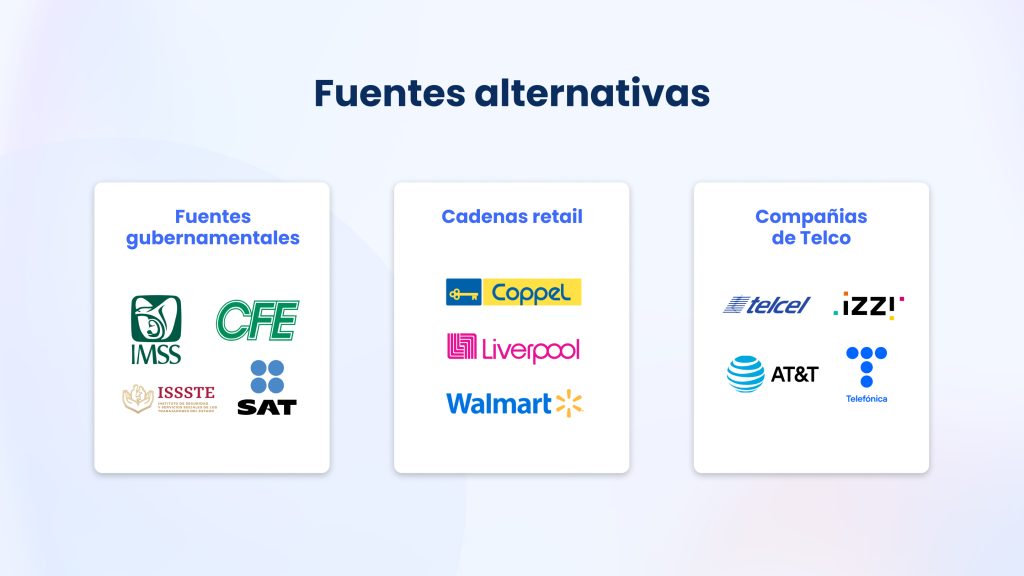
Alternative data is financial and non-financial information that goes beyond traditional credit history and covers a wide range of unconventional data, such as social media behavior, utility payment history, online consumption habits, telecommunications data and other indicators. It offers a more complete and up-to-date view of the applicant's financial situation.
A study conducted by FICO, one of the leading risk analytics companies, showed that analyzing social media data can significantly improve the accuracy of credit scoring models. By analyzing an individual's social media connections, it is possible to infer their level of responsibility, stability and ability to meet their financial obligations.
Maximize your credit scoring: Benefits of merging Traditional and Alternative Data
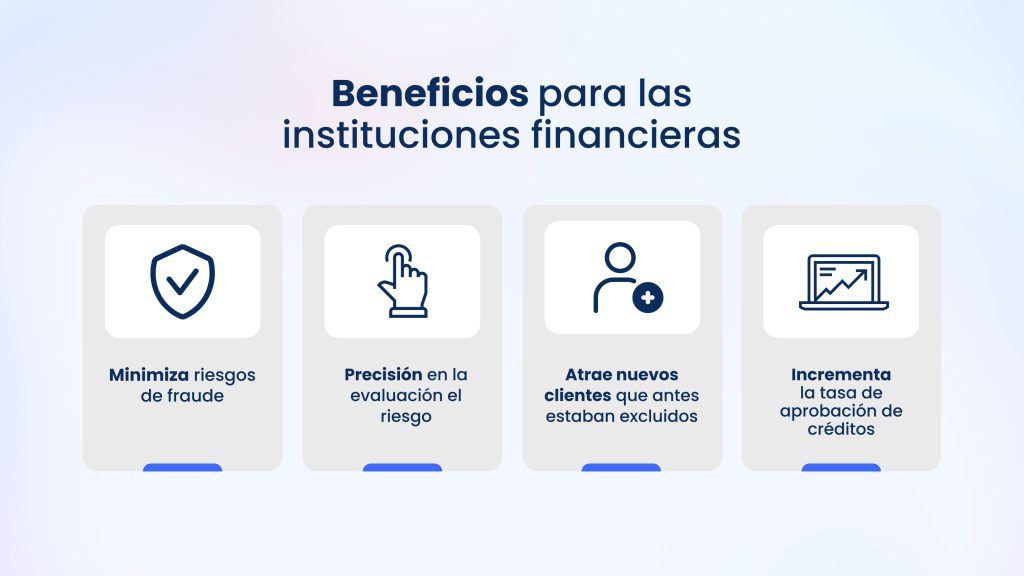
- Greater accuracy in risk assessment: Credit scoring models based on the fusion of alternative and traditional data are more accurate at predicting the probability of default.
- Increased loan conversion: By evaluating a larger number of applicants, financial institutions can grow their customer base.
- Reduced credit risk: More accurate scoring models make it possible to identify the best candidates, minimizing losses from defaults.
- Improved customer experience: Faster, more personalized evaluation processes that allow users to get a loan in minutes.
- Greater accuracy: Assessment models that combine traditional and alternative data reduce risk for financial institutions.
- Financial inclusion: People with little or no credit history now have the opportunity to access credit.
It is also important to mention that data integrated with generative artificial intelligence and machine learning is essential for processing and analyzing large volumes of data. By applying advanced algorithms, it is possible to identify complex patterns in the data and build highly accurate, customizable credit scoring models.
The fusion of traditional and alternative data is transforming credit scoring, offering unprecedented opportunities to increase financial inclusion, improve the customer experience and boost loan conversion. Companies that adopt this solution will be better positioned to compete in an increasingly digital and demanding market.
 Facebook
 Linkedin
 Instagram
 Whatsapp